
Carrier Intelligence
Understand the carrier universe around a market.
Carrier Intelligence helps identify the relevant carrier universe around a market: carrier identity, authority status, fleet scale, cargo profile, inspection history, safety posture, and likely operating fit.
North Star draws on ProHRHQ, which organizes public FMCSA records — the MCS-150 census, the Safety Measurement System BASIC categories, MCMIS inspection and crash history, and the formal federal safety rating where one is on file — into a usable per-carrier operating profile, with a peer-cohort grade as ProHRHQ analysis layered on top.
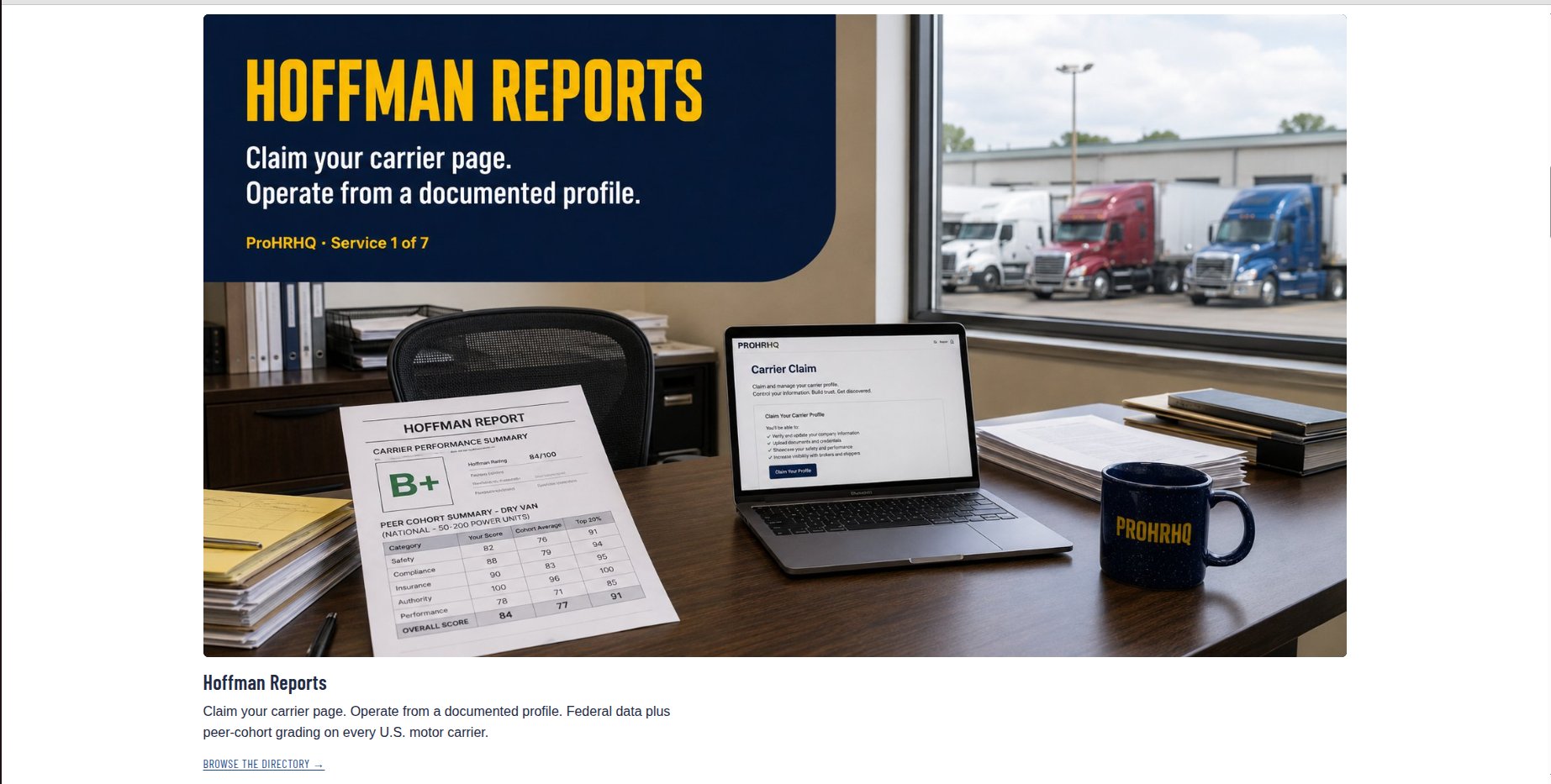
Sample Carrier Report
A live example of the kind of carrier report used when evaluating freight markets and possible logistics users.
What the reports help identify
Carrier Identity
Legal name, USDOT / MC authority, status, location, and basic operating classification.
Fleet Scale
Power units, drivers, inspection activity, and scale indicators.
Authority & Operating Profile
Interstate authority, carrier type, operating classification, and over-the-road indicators.
Cargo & Equipment Signals
Cargo categories and operating characteristics that may indicate fleet needs.
Safety & Inspection Context
Inspection history, crash indicators, out-of-service information, and safety-rating references where available.
Corridor Relevance
Used with parcel, access, zoning, floodplain, soils, and traffic data to identify likely users and market-fit assumptions.
Carrier Intelligence indicates a likely carrier universe and operating-fit signals. It does not establish exact freight flows, exact lane density, or guaranteed demand; those require direct confirmation and field validation.
Logistics land opportunities across U.S. freight corridors
North Star screens and advances candidate sites for yards, terminals, IOS, staging, fleet operations, truck plazas, and distribution-support uses.